
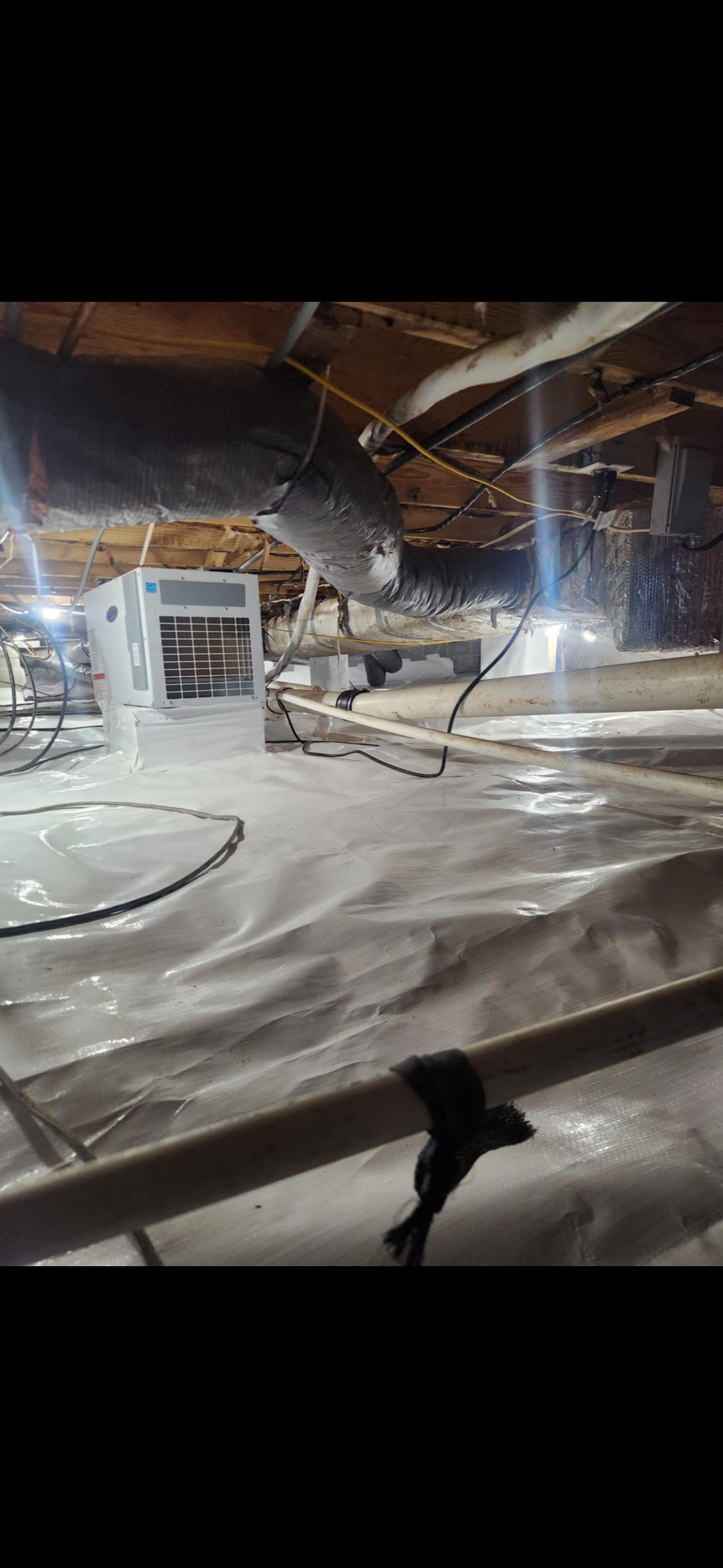
Keeping crawl spaces and homes dry is a practical, proven way to stop condensation, lower indoor relative humidity, and reduce the risk of mold in vulnerable foundations. This page explains how purpose-built crawl space dehumidifiers — combined with other moisture-control measures — protect homes in Emporia, VA and nearby NC/VA communities like Rocky Mount and Wilson. You’ll find clear benefits of professional dehumidification, common local service options, typical cost drivers, and why certain models (for example, Aprilaire) are often recommended for our regional climate. We also walk through simple diagnostics you can do, what to look for when hiring a local contractor, and how to request a free, on-site estimate. Practical checklists, comparison charts, and inspection tips are included so you can decide whether professional dehumidification is the smart next step to protect indoor air quality, structural components, and long-term energy performance.
Installing a crawl space dehumidifier lowers the relative humidity under your house to levels that slow mold growth, reduce musty odors, and protect wood from rot. With less moisture in joists, insulation, and ductwork, you’ll see fewer biological problems and better insulation performance. In Emporia and nearby NC/VA areas, treating crawl space humidity often improves whole‑house indoor air quality and eases HVAC workload because less damp air migrates into living spaces. The result: immediate comfort gains and long-term savings from avoided repairs and reduced mold-remediation costs.
Crawl space dehumidifiers remove moisture from the air either by condensing water vapor or using desiccant media, lowering relative humidity below levels that support mold. Keeping RH in a target range (typically under about 60% in humid climates) reduces the number of hours surfaces stay wet — the key condition mold needs to grow. A steady, mechanical approach also prevents repetitive wet‑dry cycles that cause wood to swell and rot, protecting joists, subfloors, and insulation performance over time. Continuous dehumidification handles ongoing moisture sources — soil vapor, seasonal humidity, and pressure differences from HVAC — far better than occasional drying. That’s why correct unit sizing and continuous operation are critical for reliable control.
Professional installers ensure the unit is sized correctly, the humidistat is positioned for accurate control, condensate is handled reliably, and electrical work is safe and code‑compliant — all essential for lasting performance. A qualified technician starts with an inspection and humidity readings, then selects a unit sized for crawl space volume, insulation condition, and local moisture loads. Incorrect sizing often causes short cycling or poor humidity control. Pros also plan proper drain routing or pump installation and coordinate with encapsulation work when needed, which preserves warranties and reduces callbacks. Regular service and monitoring help catch related problems early — leaks, vapor barrier tears, or drainage failures — so the dehumidifier continues to deliver mold prevention and structural protection.
In Rocky Mount, homeowners can choose several effective moisture-control services. Most durable solutions combine mechanical dehumidification with structural work such as vapor barrier installation, sump pump and drainage upgrades, insulation improvements, and targeted ventilation changes. Each service addresses different moisture sources — groundwater entry, condensation, plumbing leaks, or poor airflow — and the best results come when treatments match the specific source and foundation type.
Wilson-area houses often have raised foundations or slab‑on‑grade construction, and each needs a tailored moisture-control plan. Raised foundations typically benefit from encapsulation plus a dedicated crawl space dehumidifier to protect joists and maintain steady humidity. For slabs with persistent indoor humidity, whole‑house dehumidifiers or duct‑mounted units paired with exhaust ventilation and sealing may be more effective. In many cases, encapsulation combined with a properly sized dehumidifier provides the best balance of moisture control and energy efficiency. Regular monitoring and seasonal checks are important because regional humidity can shift during the year.
Matching the solution to foundation type and moisture source leads to longer‑lasting results and makes maintenance expectations clear for homeowners.
Controlling moisture reduces conditions that promote mold and dust‑mite growth, which lowers allergen circulation into occupied rooms and cuts down on musty odors. By limiting humid air movement from the crawl space, dehumidification and encapsulation also ease HVAC load and improve filtration effectiveness, helping deliver cleaner air. Typical IAQ improvements include visible reductions in mold, fewer odors, and better occupant comfort — all of which can contribute to lower energy use when HVAC systems run more efficiently. With IAQ benefits in mind, the next section covers cost considerations for crawl space dehumidifier installations in NC/VA.
There isn’t a single price for every home. Estimates depend on predictable drivers, so use ranges and request a site-specific free estimate to get accurate pricing. Major cost factors include the equipment type and capacity, crawl space access and prep needs, the requirement for condensate pumps or rerouted drains, and any encapsulation or structural repairs needed before installation. Portable units cost less up front but typically deliver lower long-term control than permanently installed crawl space units, which require more initial work but offer superior performance and lower maintenance over time. The best next step is an an inspection so a technician can present tailored options, including financing or phased work if needed.
Several technical and logistical factors change the final price. Unit capacity must match crawl space volume and moisture load; higher capacity or units with pumps cost more. Accessibility affects labor time — low clearance, heavy debris, or obstructed access add hours. Additional work like replacing rotten joists, upgrading insulation, or installing a vapor barrier increases materials and labor. Condensate management (gravity drain vs. pump) changes component costs and maintenance needs, and some jobs require permits or electrical upgrades. These variables typically create the widest differences between estimates.
Having a professional inspection identify which factors apply will narrow your price range and reveal where phased work can lower immediate expense.istent moisture control, which is essential to prevent mold and protect structural elements.
Pick a local provider by combining technical vetting with trust signals so you feel confident about long‑term performance and aftercare. Key checks include the company’s method for on‑site measurement and unit sizing, examples of similar local jobs, clear scope for drainage and electrical work, and warranty or maintenance commitments. Providers familiar with regional humidity patterns and common foundation types will craft more durable solutions for Emporia and nearby NC/VA towns. Use a checklist to compare estimates and find the plan that balances cost, effectiveness, and ongoing support.
Use a short list of focused questions to assess competence, scope, and accountability. Ask how the company sizes units — do they measure crawl space volume and record humidity data? Confirm whether proposals include condensate routing or pump installation, electrical work, and any necessary vapor barrier repairs. Request details about warranties, post‑installation service, and references or photos of similar projects. These questions reveal whether the provider is focused on a lasting solution or a quick fix.
Local reviews shed light on workmanship, responsiveness, and reliability, but focus on recent, detailed reviews rather than star ratings alone. Look for projects that match your scope — encapsulation plus dehumidifier installation — and reviews that include before/after descriptions or photos. Testimonials about follow‑up service, condensate handling, and warranty claims are strong indicators of dependability. Verifying references and confirming work in comparable soils and foundation types gives the best sense of a provider’s track record.
With a clear set of questions and a sensible way to read reviews, you’re ready to request site‑specific estimates and choose a provider whose plan aligns with your long‑term moisture‑control goals. Use the provider’s website or Google Business Profile to request a free estimate and confirm service area coverage.
Knowing the high‑signal signs that call for a professional moisture assessment helps you act before mold or structural damage worsens. The clearest indicators are visible mold or mildew, persistent musty odors, condensation on pipes or walls, high indoor humidity readings, repeated HVAC short‑cycling, or a history of water intrusion or pest activity tied to damp conditions. These signs mean passive fixes aren’t enough and a professional inspection with a dehumidification plan is likely needed. The short diagnostic checklist below helps you decide whether to monitor or call an expert.
Priority diagnostic signs include visible mold or mildew in crawl spaces or living areas, which shows active biological growth that needs control and remediation; persistent musty odors, pointing to ongoing moisture driving microbial activity; and condensation on pipes, ductwork, or walls, a clear symptom of high relative humidity and surface wetness.
When these indicators appear, a professional assessment can identify the root cause and recommend the right mix of dehumidification, drainage, and structural repairs.
Start with a handheld hygrometer to measure relative humidity in both living areas and the crawl space; consistent readings above about 50–60% inside conditioned spaces, or above 60% in the crawl space, are cause for concern in our humid climate. Look for staining, efflorescence on foundation walls, swollen or discolored wood, and visible mold patches. A persistent musty smell is another strong clue. Check for condensation on cold surfaces during humid months and note if your HVAC cycles unusually often — both suggest excess moisture load. If these signs continue despite basic ventilation or portable dehumidification, schedule a professional moisture assessment to locate sources like ground vapor, plumbing leaks, or poor drainage.
Accurate measurement and observation guide whether to keep monitoring or move to a professional inspection — the latter is the next step when evidence points to ongoing moisture intrusion.
Schedule professional help when high humidity readings persist for more than a couple of weeks despite basic mitigation, when you see visible mold, or after recurring water intrusion. Act immediately if structural components show rot, occupants have worsening allergy symptoms, or musty odors don’t go away after cleaning and ventilation. For many homeowners, the tipping point is when objective data (sustained elevated RH) aligns with physical evidence (mold, staining, condensation). At that point, arranging an on‑site assessment and free estimate from a qualified local provider is the right move to protect health and your home’s structure
Professional crawl space dehumidification delivers real benefits: lower mold risk, stronger structural protection, and better indoor air quality. Understanding moisture control helps homeowners make choices that safeguard health and preserve property value. Take the next step toward a drier, healthier home by scheduling a free estimate with a qualified local provider today. We offer moisture‑control solutions designed for the climate and foundations common to Emporia and the surrounding area.
Business Name:
Capps Crawlspace and Construction, LLC
Address:
1953 River Rd Unit C, Henrico, NC 27842
Phone:
434-594-1219 (VA)
252-308-2231 (NC)
Business Hours:
Monday-Sunday: 8:00 AM- 8:00 PM
