
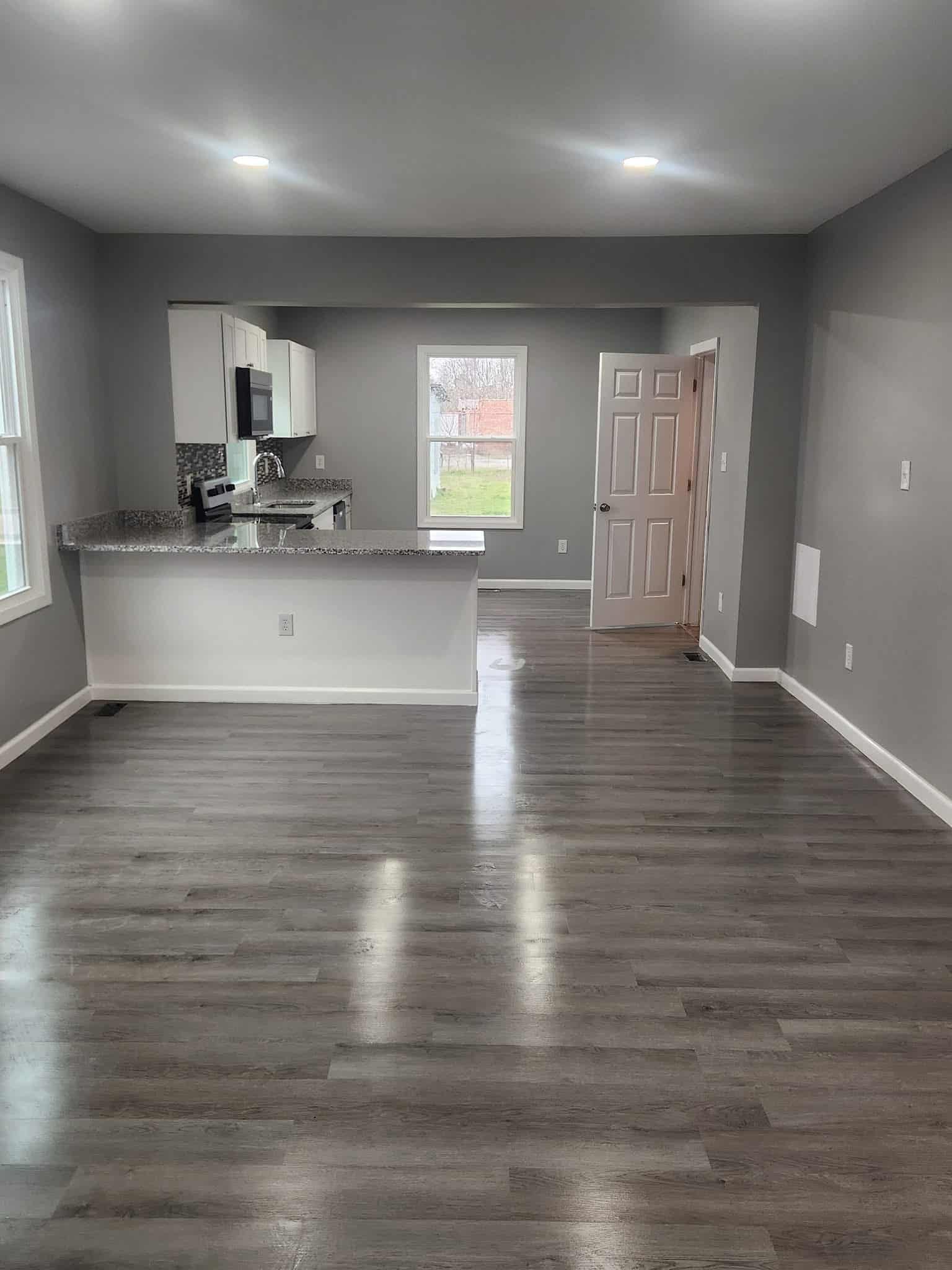
Lakefront homes around Bracey, VA, face a unique combination of flooring challenges: high humidity, occasional water exposure, sand and grit tracked inside, and steady foot and pet traffic. This guide explains how these conditions accelerate flooring wear and moisture damage, which materials are most resistant to scratches and water, and more.
Homes near the lake face two types of stressors that can shorten the life of flooring: environmental moisture and abrasive use. High ground and ambient humidity increase the relative humidity of the subfloor and can drive vapor into finishes, leading to swelling, cupping, and adhesive failure. Seasonal lake-level shifts and splash events also increase the frequency of wet floors.
At the same time, sand, grit, and shoes introduce abrasive particles that wear finishes, and pets and heavy traffic cause scratches and concentrated wear in high-use zones. Because both moisture control and surface durability are important, homeowners should evaluate floors on these two fronts, as ignoring either one often leads to premature failure.
Moisture reaches floors in three main ways: vapor diffusion from humid air, capillary rise from wet soils, and episodic liquid exposure from flooding. Each harms different flooring systems. Vapor raises subfloor moisture, which can cause wood-based subfloors and engineered cores to swell, deform, and lose their adhesive bond, leading to cupping, buckling, and gaps over time.
Porous finishes can trap moisture and encourage mold growth under coverings, causing odors and indoor air quality problems that can spread from the crawl space into living areas. That’s why a layered defense (vapor barrier, sealed crawl space, and waterproof surface) reduces risk and helps the finishes last.
Pets, sand, and frequent foot traffic primarily cause abrasion and point-scratch damage, which wear away surface finishes and thin wear layers. Claws and grit act like micro-sandpaper, removing protective coatings on resilient floors and exposing printed décor layers or composite cores to faster abrasion. High-traffic zones, such as entrances, kitchens, and stairs, exhibit these effects first.
Choosing materials with thicker wear layers and tougher surface finishes (for example, aluminum-oxide coatings on engineered hardwood or high-density wear layers on luxury vinyl plank/luxury vinyl tile) and adding entry mats, along with a regular cleaning routine, will significantly slow visible wear.
Selecting the best scratch-resistant, water-tolerant flooring for your Bracey home involves balancing scratch resistance, waterproofing, appearance, and the room’s exposure to moisture. The ideal choices pair an impermeable or waterproof surface with a durable wear layer and a stable core, addressing both surface scratches and moisture from the subfloor.
Modern luxury vinyl plank is a leading choice for lakefront properties because it combines a scratch-resistant wear layer with waterproof core options, such as stone-plastic composite or wood-plastic composite. Those cores reduce dimensional changes caused by humidity and occasional water, so planks stay flat and bonded, while decorative layers recreate the look of wood or stone.
Luxury vinyl plank typically features a dense, abrasion-resistant wear layer rated for heavy foot and pet traffic, and many styles include textured surfaces for enhanced slip resistance when wet. For its blend of waterproofing, scratch resistance, visual variety, and midrange cost, luxury vinyl plank is a practical first pick for entryways, kitchens, and main living areas in Bracey lakefront homes.
Porcelain and ceramic tile give a nearly impermeable surface that resists both water and scratches, making tile an excellent option for kitchens, bathrooms, and mudrooms on the lake. Porcelain, in particular, absorbs very little water and has high abrasion resistance, which limits moisture damage and surface wear from grit.
Proper grout selection and periodic grout sealing also help prevent discoloration and reduce moisture paths. Textured or anti-slip tiles also improve safety in wet conditions. Tile can feel cold underfoot and often costs more to install than luxury vinyl plank, but its long life and moisture tolerance make it a strong choice for the highest-risk rooms.
Engineered hardwood is a good fit when you want a true wood appearance but need better dimensional stability than solid hardwood. Engineered planks use a thin real-wood veneer over cross-layered cores, which reduces movement from humidity swings and is less prone to cupping when installed correctly. Select engineered products finished with durable factory coatings, such as aluminum oxide or high-build urethane, to enhance scratch resistance.
Limit installation to living and bedroom areas that stay relatively dry and temperature-stable. For basements, mudrooms, or areas with direct water exposure, waterproof luxury vinyl plank or tile remains a safer choice because engineered wood still carries a higher moisture risk than resilient or ceramic surfaces.
Crawl space encapsulation is a moisture-control system that helps seal the crawl space from ground and outside humidity with a combination of vapor barriers, sealed vents and penetrations, insulation, and active dehumidification. That approach reduces the moisture load moving up into subfloors and finished flooring.
By interrupting vapor diffusion and preventing standing water and wide humidity swings beneath the house, encapsulation stabilizes subfloor moisture levels and preserves adhesive bonds and finish integrity. Practical benefits for floors include less warping and cupping, lower mold risk under coverings, and improved indoor air quality, which also helps maintain many flooring warranties.
Choosing the right floor starts with a prioritized checklist that maps budget, appearance priorities, pet needs, and room-specific moisture exposure to material recommendations and protective services. First, determine whether your property is a full-time residence, a seasonal lake house, or a high-traffic rental, as this affects maintenance tolerance and replacement costs. Then match rooms to materials: waterproof luxury vinyl plank or tile for entries and kitchens, engineered hardwood for low-moisture living areas, and waterproof options in basements—while considering wear-layer thickness and finish hardness for pet durability. Finally, pair the chosen material with a subfloor inspection and, if needed, crawl space encapsulation to build a systems-level solution that reduces risk and upkeep.
Protecting floors in a humid, sandy lake environment takes daily prevention plus a scheduled maintenance plan. Preventive habits include using quality entry mats, sweeping frequently to remove abrasive particles, placing felt pads under furniture, and regularly trimming pets’ nails to reduce point-scratch damage.
For moisture control, promptly wipe up spills, maintain indoor relative humidity within the manufacturer’s guidelines, and schedule crawl space repairs or checks to confirm that encapsulation and dehumidifiers are functioning properly. Use manufacturer-approved cleaning products and avoid using ammonia- or oil-based cleaners, as they can harm finishes or adhesives over time.
Use a layered protection strategy that combines smart habits, the right products, and environmental controls. Behavioral steps include leaving shoes at the door, installing high-quality mats, and maintaining regular cleaning to remove abrasive particles before they cause damage. Product choices (thicker wear layers on luxury vinyl plank, textured tile, or engineered hardwood with aluminum-oxide factory finishes) reduce visible scratches.
Environmental controls, such as crawl space encapsulation, dehumidifiers, and sealed transitions, limit moisture problems that can turn surface damage into structural issues. Together, these actions form a defensive system that preserves both the surface appearance and the subfloor health needed for long service life.
Call in a professional if you notice persistent cupping, active buckling, adhesive failure, moldy odors, or visible subfloor decay, as these signs require timely intervention to prevent more severe problems. Immediate assessment is recommended for active buckling or rapidly widening gaps. For high-humidity lakefront homes, an annual inspection helps catch early warning signs like minor seam separation or elevated subfloor RH.
If you suspect moisture, pair the flooring inspection with a crawl space or basement evaluation to identify root causes, rather than just addressing visible symptoms. For moisture or mold concerns affecting floors, Capps Crawlspace and Construction, LLC offers encapsulation, waterproofing, and mold remediation services. We also provide free estimates and are licensed and insured to deliver coordinated moisture-control and flooring work.
Choosing the right flooring for your Bracey, VA, lakefront home means thinking about both surface durability and moisture control. When you match the right material to each room and pair it with proactive subfloor measures, you help protect your investment and reduce long-term costs. If you’d like help evaluating options or scheduling an on-site estimate, contact us, and we’ll walk you through a practical plan tailored to your home.
Business Name:
Capps Crawlspace and Construction, LLC
Address:
1953 River Rd Unit C, Henrico, NC 27842
Phone:
434-594-1219 (VA)
252-308-2231 (NC)
Business Hours:
Monday-Sunday: 8:00 AM- 8:00 PM
